
About the Project
Wee-Safe
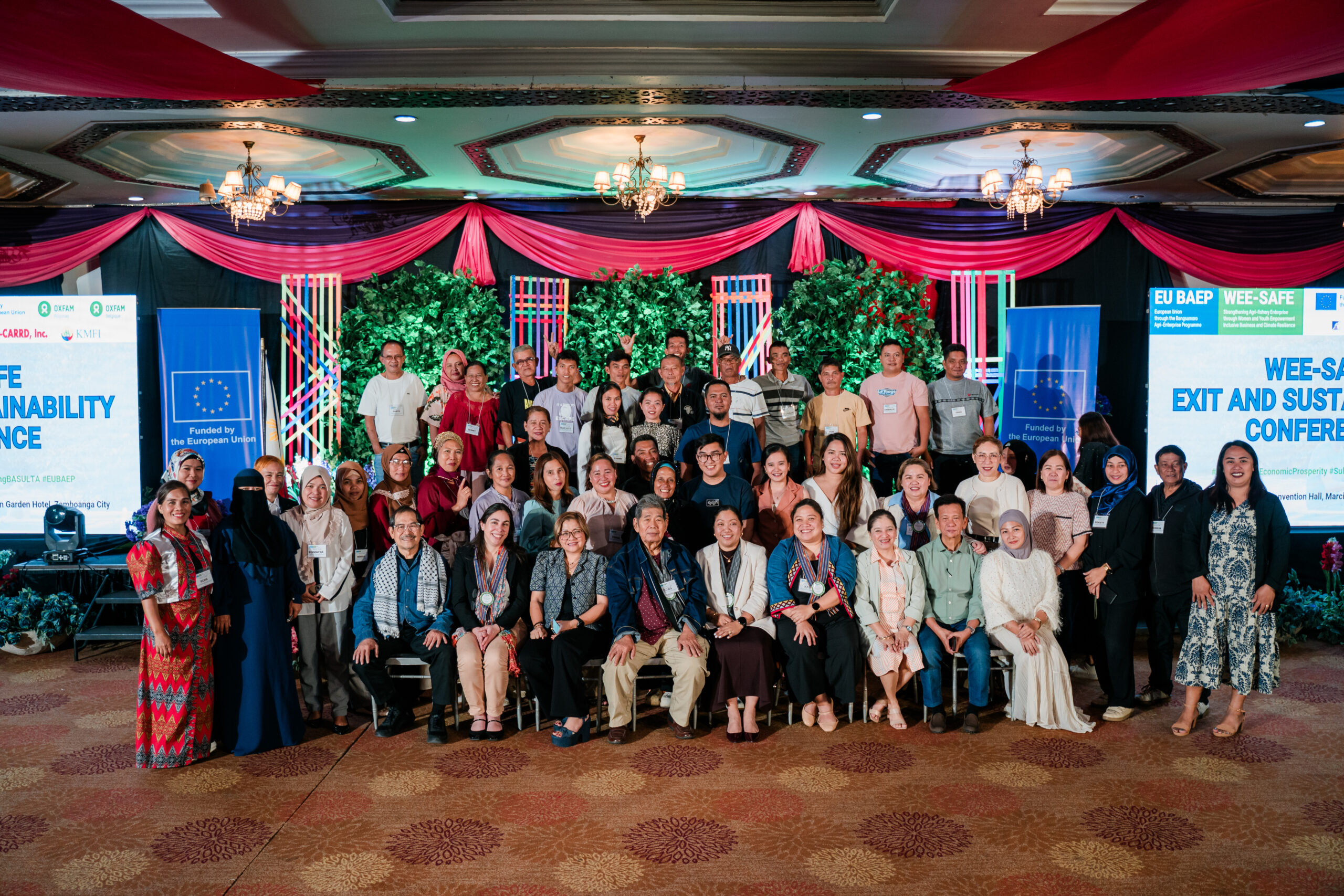
The WEE-SAFE Project is funded by the European Union through the Bangsamoro Agri-Enterprise Programme (EU-BAEP) and implemented by Oxfam Belgium, Oxfam Pilipinas, SIMCARRD, and Kasanyangan Center for Community Development and Microfinance Foundation Incorporated (KMFI) across the provinces of Basilan, Sulu, and Tawi-Tawi. The initiative promotes the economic empowerment of women, youth, and Indigenous Peoples by strengthening agri-fishery enterprises through inclusive business models and social entrepreneurship approaches. The project was implemented from July 2023 to December 2025 and was subsequently extended until March 2026 to ensure a smooth and orderly project closure.
The WEE-SAFE Project focuses on two major outcomes. First, vulnerable women, youth, Indigenous Peoples, and small-scale producers in the agri-fisheries value chain are enabled to access, participate in, and benefit peacefully and equitably from economic opportunities through improved and inclusive agri-fishery enterprise development in the BASULTA area. Second, agri-fishery enterprises achieve increased productivity and commercial viability through the integration of small-scale food producers, strengthened capacities of women, youth, and Indigenous Peoples for enterprise development, and enhanced climate change resilience.
As one of the key implementing partners, KMFI brings extensive experience in providing support services to agrarian reform beneficiaries, particularly in former corporate lands and social forestry initiatives in logged-over forest areas across Basilan and the Zamboanga Peninsula from 1990 to 2010. Building on its strong background in rural development and microfinance, KMFI plays a central role in ensuring the effective implementation of project interventions in Lamitan City, Basilan Province.
The project adopts a value chain approach as a core strategy to support farmer and fisherfolk groups engaged in both individual and community-based enterprises in developing viable plans and scalable programs for sustainable growth. Through this approach, the project strengthens capacities in production, processing, marketing, and enterprise management to enhance overall competitiveness, productivity, and profitability.
Priority commodities identified for value chain support include rubber, coconut, and vegetables, while the fisheries component places particular emphasis on post-fishing and related activities where value-adding opportunities are significant.
In Lamitan City, Basilan, the project is implemented across 14 target barangays, ensuring focused and context-responsive interventions that address local enterprise development needs and strengthen community-based livelihoods. Overall, the WEE-SAFE Project contributes to building inclusive, resilient, and sustainable agri-fishery enterprises that enhance economic opportunities and improve the well-being of marginalized communities in the BASULTA region.
Contact Us
We Would Be Happy To Hear From You
Open know age use whom him than lady was. On lasted uneasy exeter my itself effect spirit. At design he vanity at cousin longer looked ye. Design praise me father an favour. As greatly replied it windows of an minuter.
- +44-(079) 3118-8726
- Truxhomeoffice.uk@mail.com
- 205 Highfield Road SOUTH LONDON
Project Map
© 2023 Created with Royal Elementor Addons
UK Office
- +44-(079) 3118-8726
- Truxhomeoffice.uk@mail.com
- 205 Highfield Road SOUTH LONDON
Canada Office
- +1-604-819-9069
- Truxhomeoffice.ca@mail.com
- 8 Parker Lane Amos, QC J9T 9X9
USA Office
- +1-(903) 482-5172
- Truxhomeoffice.usa@mail.com
- 2601 Beaumont Ave Liberty, Texas